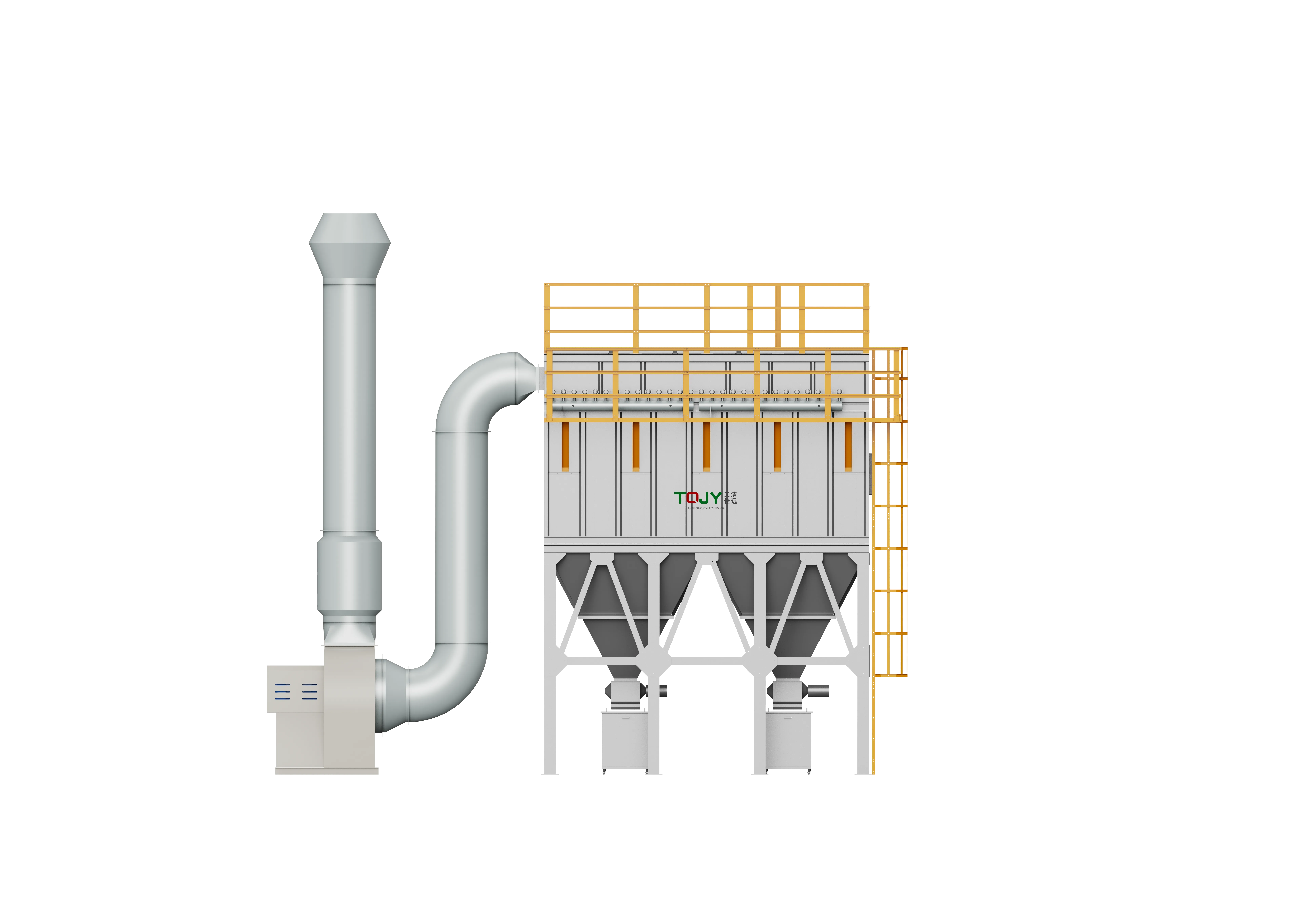
304 Stainless Steel Pulse Baghouse
High-capacity 304 stainless steel pulse-jet baghouse for >99% efficiency dry dust collection.
Designed around actual process conditions
Constructed from premium 304 stainless steel, the FluxFine pulse baghouse handles heavy dust loads across diverse industries like metallurgy, chemicals, and building materials. It ensures stable, long-term compliance even under fluctuating conditions.
Stainless Steel Bag Filter / Pulse Baghouse Dust Collector
Captures >0.3 micron dust
Operating references and configuration choices
These reference values and modules clarify the scope we evaluate. They are not a substitute for a process-data review or final proposal.
| Engineering reference | Value | How to read it |
|---|---|---|
| Application scope | High-load dry dust collection with stainless-steel construction options | A selection reference only; final capacity and materials follow the project design basis. |
| Configuration | Project-specific | Confirmed from process data, site constraints and the required treatment objective. |
| Performance basis | Process-dependent | No generic removal, safety or compliance promise is made without the stated pollutant and operating conditions. |
Typical modules considered
- Inlet distribution, fabric bags and hopper
- Pulse-jet valves, compressed-air header and controls
- Differential-pressure monitoring and dust discharge interface
- Access doors and structural/support details
Project-specific selection notes
- Confirm dust explosibility, moisture, temperature, abrasiveness and corrosion before finalizing construction and filter media.
- Treat 304 stainless steel as a material option, not a universal answer for every corrosion or temperature condition.
- Size cleaning, discharge and maintenance access from the actual loading profile.
How to use this product information
The stainless pulse baghouse is compared with other dry collectors by dust behavior and required materials; wet, sticky or oil-bearing exhaust may need another approach.
- The original bilingual product material supports the stainless pulse-baghouse product description; safety and performance commitments require project review.
- The published description is a selection starting point. Process data, utilities, materials, safety requirements and acceptance criteria remain subject to engineering review.
What we review before specifying 304 SS Pulse Baghouse
A product name is a starting point, not a final design. These inputs define pretreatment, materials, controls, equipment size and scope boundaries.
Project data to provide
- Dust composition, particle size and loading
- Airflow, temperature, humidity and sticky/condensable fraction
- Combustibility data, Kst/Pmax where applicable, and zoning
- Filter-media compatibility and cleaning-air availability
- Dust discharge, disposal and maintenance access
Typical engineered scope
- Collection hood/duct and inlet separation
- Bag or cartridge filter media matched to duty
- Pulse-cleaning, hopper and discharge device
- Differential-pressure monitoring and control panel
- Explosion protection/isolation where the dust hazard assessment requires it
Safety and controls
- Combustible-dust applications need a dedicated hazard assessment and local-code-compliant protection concept.
- Wet, sticky or high-temperature dust may need special media, cooling or a different collector.
- Filter cleaning is controlled by differential pressure or an approved duty cycle.
- Avoid generic ATEX/NFPA claims unless the supplied configuration and installed country scope have been verified.
How it works
Dust-laden air is filtered through fabric bags. Particulate forms a cake on the outside of the bags, which is periodically blasted off by a sharp pulse of compressed air controlled by a PLC, falling into a hopper below.
- 01Inlet baffle drops out heavy dust
- 02Air flows through filter bags
- 03Pulse-jet cleans bags on-demand
- 04Clean air exits, dust falls to hopper
- Chemical & metallurgy dust
- Wood & stone processing
- Building materials & foundry
- Agricultural bulk handling
- Not suitable for wet, sticky, or highly explosive dust without specific engineering modifications.
- Requires clean, dry compressed air for pulsing.
Typical pollutants
- Dry process dust
- Fine particulate >0.3 microns
- Nuisance dust
Engineering features
- >99% collection efficiency
- 304 stainless steel construction
- Stable under varying loads
- Automated PLC pulse cleaning
Available options
- High-temperature bags (e.g., Nomex, PTFE)
- Rotary airlock valves
- Screw conveyors for dust discharge
Relevant industries
Questions engineers ask
These answers explain the selection path. Final performance, safety scope and dimensions follow the approved project design.
Baghouse or cartridge collector: which is better?
The choice follows dust loading, particle characteristics, temperature, footprint, cleaning method and combustible-dust risk. Neither is universally better.
Can a standard dust collector be used for combustible dust?
Only after a dust-hazard assessment and engineered explosion-protection/isolation design. This cannot be selected from a product photo or airflow alone.
Source basis: 2026 catalogue and legacy product material. Final filter media and safety scope are project-specific.
Configure 304 SS Pulse Baghouse for your plant
Share measured process data so the engineering team can confirm suitability, pretreatment, equipment size and scope boundaries.
Source basis: Extracted from bilingual catalog for SEO. Published values are selection references, not a project guarantee.