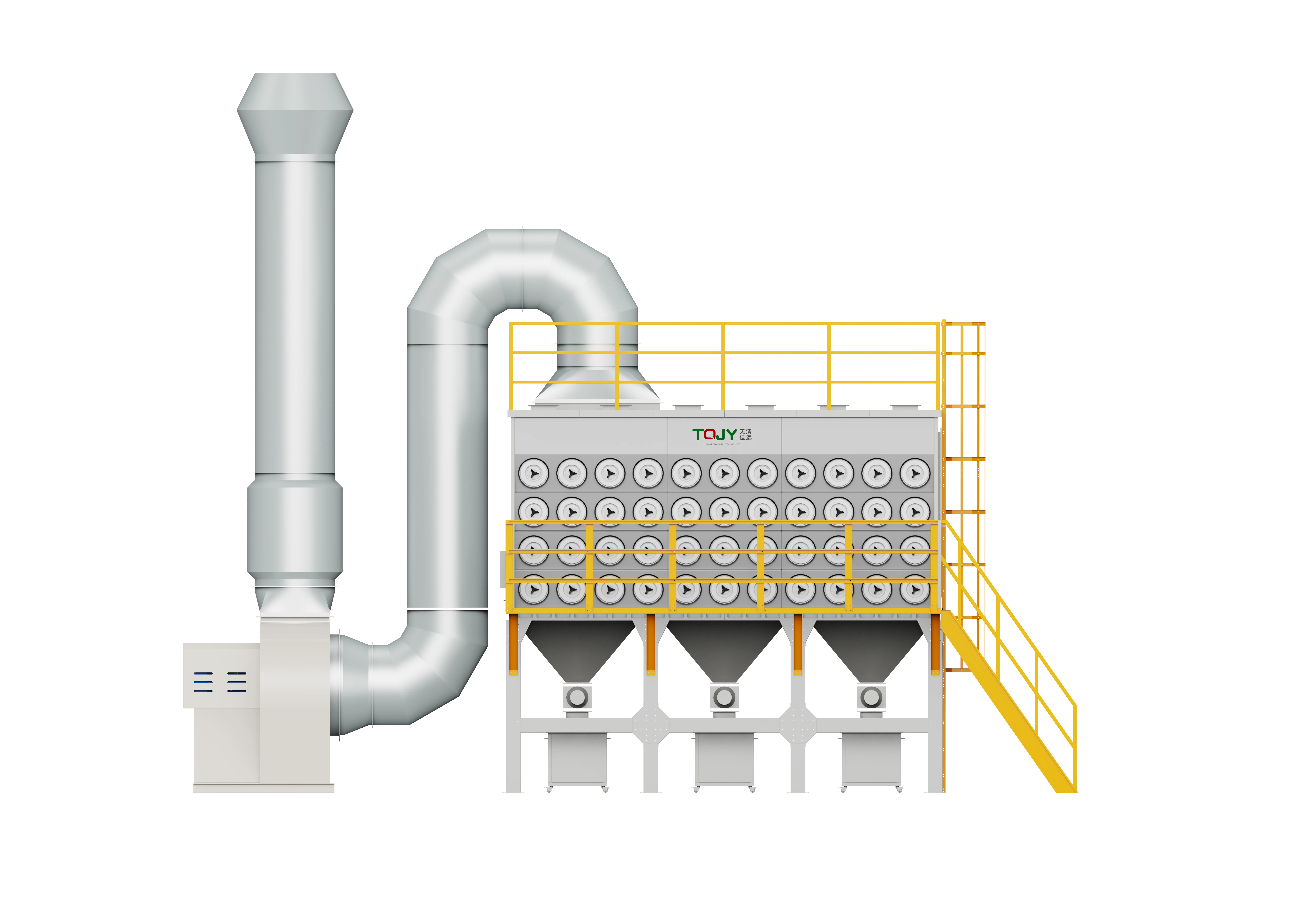
ATEX Explosion-Proof Cartridge Dust Collector
Specialized cartridge dust collector engineered with explosion vents and static grounding for combustible industrial dusts.
Designed around actual process conditions
Designed explicitly for the hazards of flammable and explosive dusts generated in chemical, pharmaceutical, and metal processing. It features explosion venting, anti-static filter cartridges, and automated controls to protect the facility and workers.
Explosion-Proof Cartridge Collector / ATEX Dust Collector
Engineered for combustible dust
Operating references and configuration choices
These reference values and modules clarify the scope we evaluate. They are not a substitute for a process-data review or final proposal.
| Engineering reference | Value | How to read it |
|---|---|---|
| Application scope | Combustible-dust collection requiring project-specific safety engineering | A selection reference only; final capacity and materials follow the project design basis. |
| Configuration | Project-specific | Confirmed from process data, site constraints and the required treatment objective. |
| Performance basis | Process-dependent | No generic removal, safety or compliance promise is made without the stated pollutant and operating conditions. |
Typical modules considered
- Cartridge filtration and pulse-cleaning system
- Bonding/grounding and monitoring provisions
- Explosion protection/isolation concept defined for the actual installation
- Safe discharge and maintenance-access arrangement
Project-specific selection notes
- Confirm dust test data, Kst/Pmax where applicable, ignition sources, location and the governing local code before selection.
- Do not treat a product name or generic “ATEX” label as proof of final site compliance.
- The final protection strategy requires specialist design for venting, isolation, suppression, siting and maintenance.
How to use this product information
Combustible-dust protection is a system-level safety decision. A cartridge collector must be engineered with the installation, dust data and applicable standard—not selected from a generic page claim.
- The bilingual product record identifies an explosion-protected cartridge concept; certification, code applicability and final safety scope are explicitly project-confirmed.
- The published description is a selection starting point. Process data, utilities, materials, safety requirements and acceptance criteria remain subject to engineering review.
What we review before specifying ATEX Cartridge Collector
A product name is a starting point, not a final design. These inputs define pretreatment, materials, controls, equipment size and scope boundaries.
Project data to provide
- Dust composition, particle size and loading
- Airflow, temperature, humidity and sticky/condensable fraction
- Combustibility data, Kst/Pmax where applicable, and zoning
- Filter-media compatibility and cleaning-air availability
- Dust discharge, disposal and maintenance access
Typical engineered scope
- Collection hood/duct and inlet separation
- Bag or cartridge filter media matched to duty
- Pulse-cleaning, hopper and discharge device
- Differential-pressure monitoring and control panel
- Explosion protection/isolation where the dust hazard assessment requires it
Safety and controls
- Combustible-dust applications need a dedicated hazard assessment and local-code-compliant protection concept.
- Wet, sticky or high-temperature dust may need special media, cooling or a different collector.
- Filter cleaning is controlled by differential pressure or an approved duty cycle.
- Avoid generic ATEX/NFPA claims unless the supplied configuration and installed country scope have been verified.
How it works
High-efficiency pleated cartridges filter fine dust. The system is structurally reinforced and equipped with explosion relief panels that safely direct any deflagration energy away from the workspace.
- 01Anti-static filtration
- 02Differential pressure pulse cleaning
- 03Safe containment in hopper
- 04Explosion venting (if deflagration occurs)
- Flammable/explosive dust (aluminum, flour, resins)
- Chemical & pharmaceutical powders
- Coating & ink manufacturing
- Automated production lines
- Must be sited according to NFPA/ATEX guidelines regarding explosion vent pathways.
- Requires rigorous static bonding and grounding.
Typical pollutants
- Combustible dust
- Fine metal powders
- Pharmaceutical API dust
- Resin powders
Engineering features
- Explosion relief panels
- Anti-static filter media
- Spark-resistant construction
- Automated PLC fault monitoring
Available options
- Rotary valve with explosion isolation
- Chemical suppression systems
- Flameless venting
Relevant industries
Chemical Industry
Resins, coatings, waterproofing, and specialty chemicals.
Pharmaceutical & Medical
Solvent exhaust from synthesis, coating, and finishing.
Heavy Machinery & Shipbuilding
Large booth coating and high-airflow paint shops.
New Materials & New Energy
Battery materials, functional films, composites and advanced material production.
Questions engineers ask
These answers explain the selection path. Final performance, safety scope and dimensions follow the approved project design.
Baghouse or cartridge collector: which is better?
The choice follows dust loading, particle characteristics, temperature, footprint, cleaning method and combustible-dust risk. Neither is universally better.
Can a standard dust collector be used for combustible dust?
Only after a dust-hazard assessment and engineered explosion-protection/isolation design. This cannot be selected from a product photo or airflow alone.
Source basis: 2026 catalogue and legacy product material. Final filter media and safety scope are project-specific.
Configure ATEX Cartridge Collector for your plant
Share measured process data so the engineering team can confirm suitability, pretreatment, equipment size and scope boundaries.
Source basis: Extracted from bilingual catalog for SEO. Published values are selection references, not a project guarantee.